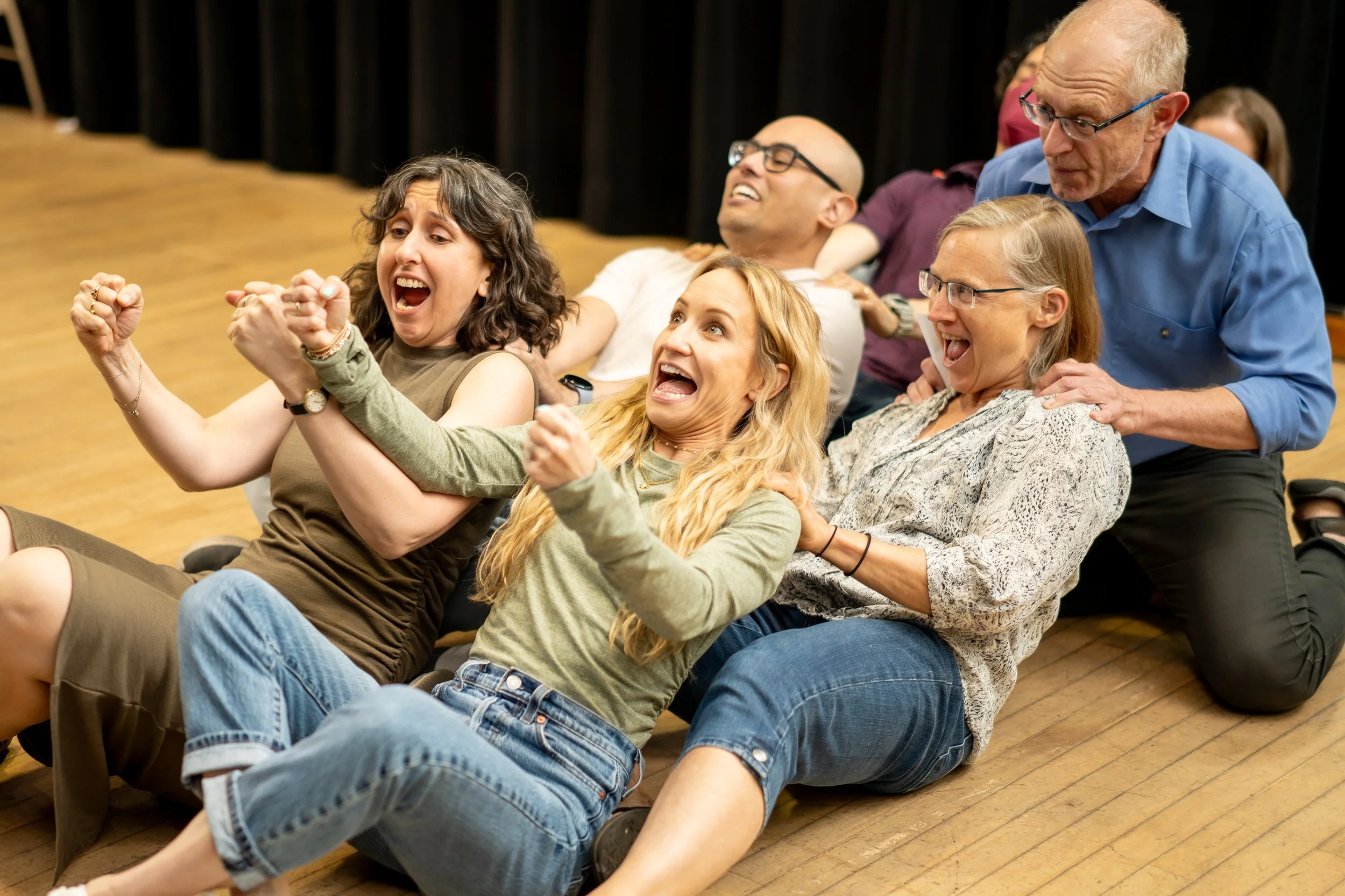
Improv Classes at Bethesda Improv Theater
Most improv classes put all the pressure on what you say next. Ours take the pressure off. We start with impulse and connection — not dialogue — so you're never scrambling for the next line. From your first drop-in class to our most advanced semester, you learn to let behavior drive the story. Scenes feel real. Fear fades. And you start building moments on stage that surprise even you.
Every class is designed and taught by founding Artistic Director Gary Jacobs, who has been teaching and directing improv for forty-two years.
“As a student of Gary Jacobs for more than a year, I never witnessed Gary deliver anything less than 150% to the class in terms of creative ideas, dedication, focus, and high energy. He is passionate about improvisation, and fortunately, his attitude is contagious.”
— Alice Lipowicz, student
Weekly Drop-In Classes
Every Sunday afternoon at Imagination Stage in Bethesda, Gary teaches two drop-in classes — one for everyone, one for experienced improvisers. Every week, all year. Start any Sunday you like. Pay only for the sessions you attend. Gary has offered these drop-in classes since 1989.
Improv-for-Everyone Workshop
Sundays, 4:00–5:30 PM at Imagination Stage, Bethesda. No prerequisites — open to everyone.
The easiest way to try improv. Come as you are — no experience, no script, no pressure. The class draws out your creativity gently and playfully, in a no-fail room where the only job is to enjoy yourself. Theater games are the heart of it, sequenced so that by the end of the afternoon, you'll have played real scenes with the group. Drop in for a single Sunday: no commitment, no prior class, no waiting.
Tuition: $30 per session, or $240 for an 8-class package (use any Sundays you like throughout the year).
“Gary’s class is like an adult summer camp. The warm-up exercises are a hoot.
The classes give me a chance to forget about my responsibilities and focus solely on what’s right in front of me. What a luxury!”
— Renee Panagos, student
Master Class in Improvisation
Sundays, 4:00–7:00 PM at Imagination Stage, Bethesda. Three hours, including the 4:00 Improv-for-Everyone Workshop as warm-up.
For experienced improvisers seeking regular high-level practice with an improv pioneer who produced the first local, commercial improv show in Washington, DC. Gary works with the group on long-form craft: scene structure, emotional honesty, ensemble dynamics, and the choices that turn a competent piece into a memorable one. Sign up for a single class or an 8-class package and use them at your own pace throughout the year. We don’t know of another master class structured like this anywhere in the region.
Tuition: $50 for a single 3-hour class and $400 for an 8-class package — eight 3-hour Sundays, used at your own pace throughout the year.
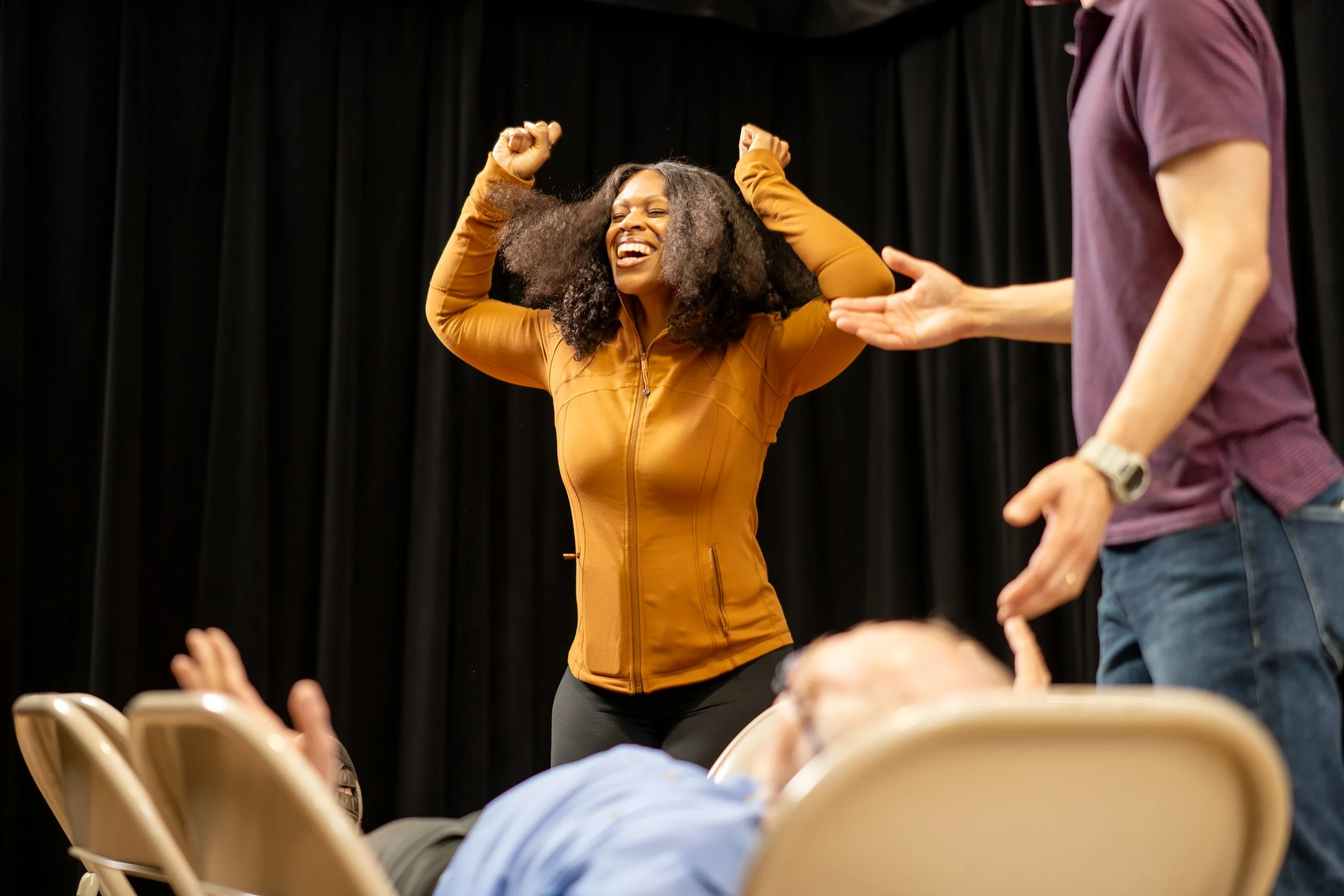
“The workshop was life-changing. I walked out with an entirely new perspective on improv. I felt freer on stage than I ever have.”
— Brian Sweeney, improviser
Improv by the Semester
Our semester sequence is a five-level curriculum, and each level builds on the one before. The whole arc takes you from your first improv exercises to improvising full-length plays with an ensemble.
Every semester is 8 weeks long, meeting once a week for 2–3 hours. Enrollment is capped at 16 students so you get personal attention and substantial stage time every session. Semesters run at different times throughout the year — join the waitlist for any level and we’ll let you know when the next one is scheduled. Joining is free, it's not a commitment, and it's the only way to get first claim on the next start date. Semesters fill from the waitlist.
Tuition: $350–$440 per semester.
Level 1: Improv for Beginners
No experience needed. Now enrolling — eight Mondays from 7:00 pm to 9:30 pm starting September 21.
Life is full of unscripted moments — the meeting that goes sideways, the conversation that takes a turn, the relative whose question you weren’t ready for. This class lowers the stakes on all of it. You’ll play simple games and build short scenes with a partner — nothing memorized, nothing rehearsed — and discover what your imagination can do when you stop second-guessing it. Most students leave their first class lighter than they walked in. Bring your curiosity. We’ll take care of the rest.
“Anyone can do it. Blissfully, ‘talent’ or being funny isn’t required. All I needed was the desire to have fun. Gary takes care of the rest. Going to improv class is a highlight of my week, and no, I’m not a recluse!”
— Julie S., student
Level 2: Listening and Reacting
Prerequisite: Level 1, or equivalent improv experience.
“Acting is reacting,” the old acting-class law goes — and in improv, that’s doubly true. This class takes a deep dive into the art of truly listening: to your scene partner, to the environment, to your own honest impulses. You’ll work with eye contact, proximity, silent scenes, and the kind of object work where a single discovery shifts the whole moment. Most students leave surprised by what comes out of them when they stop planning and start reacting.
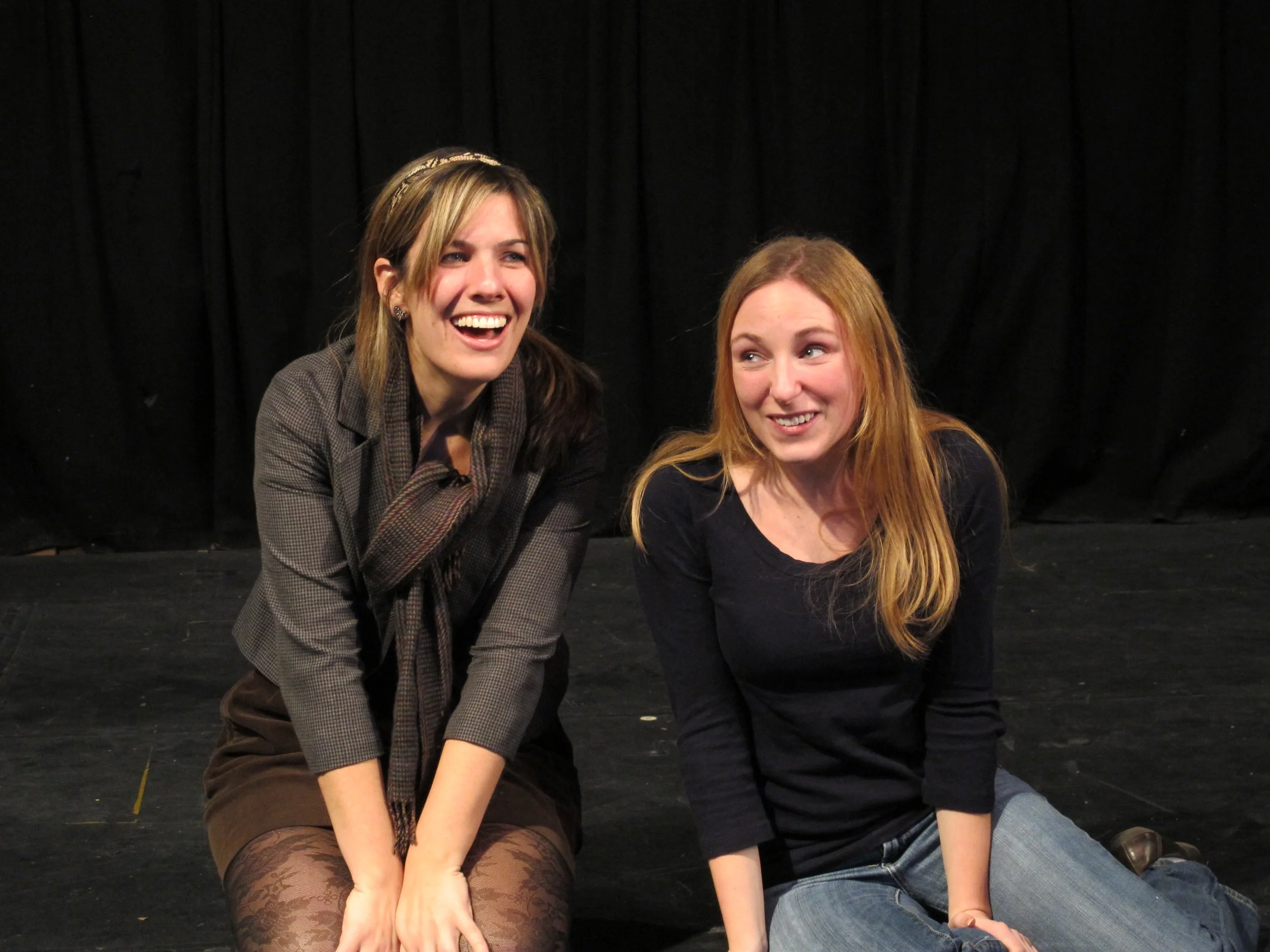
"I had a lot of fun and really loved the message that reaction is more important than planning ahead."
— Carrie Benton, improviser
Level 3: Scene Work
Prerequisite: Level 2, or equivalent improv experience.
Now we put two people on stage and build entire scenes from the ground up. You’ll learn how to start a scene without explaining it, how to discover a relationship through behavior rather than exposition, and how to keep a scene moving without falling into argument or stall. We work scene by scene — short ones at first, then longer — until you can feel the difference between a scene that holds an audience and one that’s only filling time.
"I really felt rejuvenated and refreshed in the simplicity of improv that then forms complex connections and relationships between scene partners."
— Sarah Harvey, improviser
Level 4: Multi-Scene Ensemble Work
Prerequisite: Level 3, or equivalent improv experience.
Improv gets bigger when you build together. In this class you’ll work with an ensemble of four to eight players to create multi-scene pieces: longer narratives with running threads, returning characters, and payoffs you couldn’t deliver in a single scene. You’ll learn how to track what’s happening across an entire piece, when to step forward, and when to give the focus away. It’s collaborative, it’s demanding, and it’s where many students say improv really clicked for them.
"Gary is a wealth of knowledge with a unique perspective on the craft. Our troupe will definitely be having him back time and time again!"
— Mathew Dearing, Owner/Director, Chaos Comedy
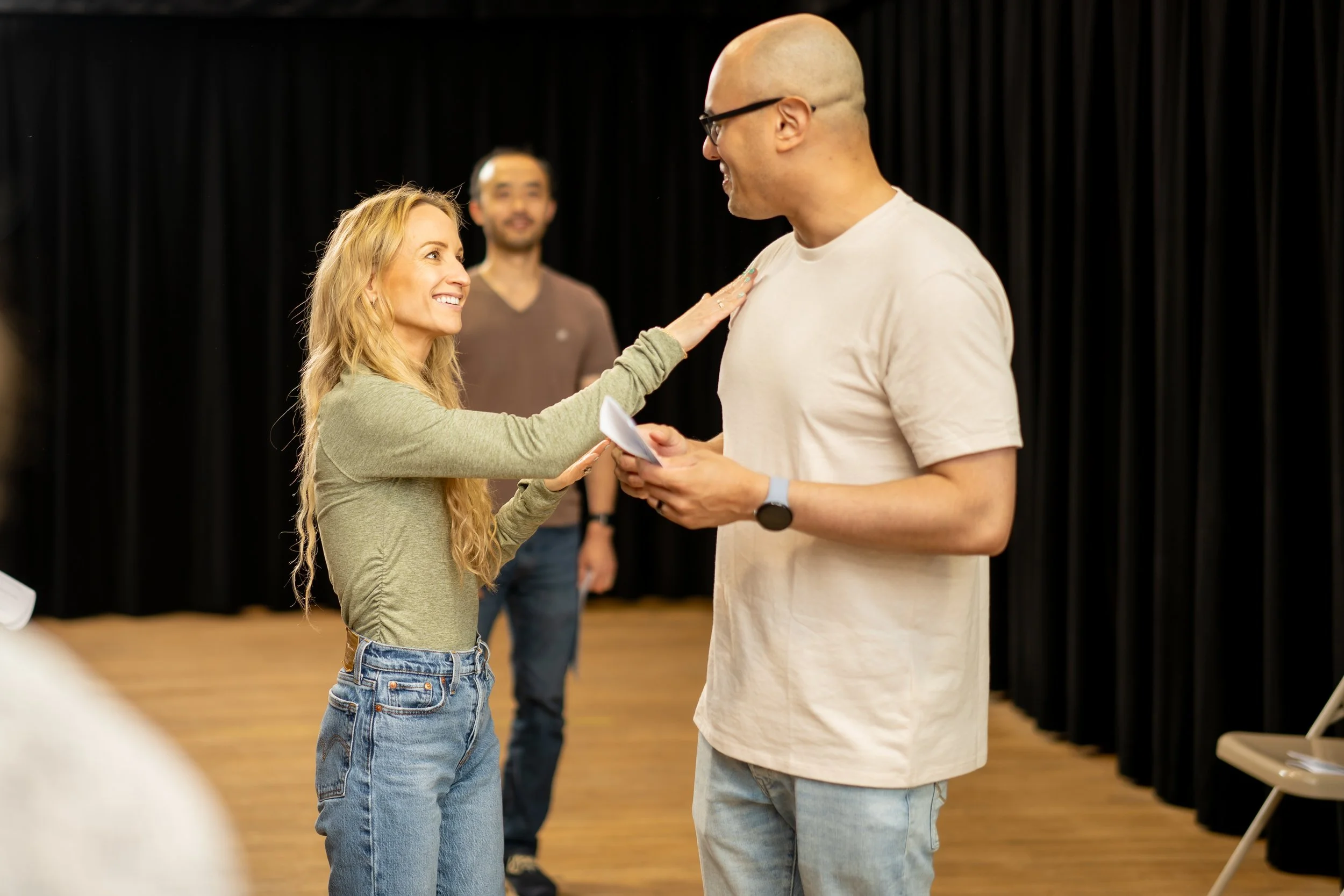
Level 5: The Improvised Play
Prerequisite: Level 4, or equivalent improv experience.
What would it be like to create an entire play — characters, story, ending and all — without a script, in real time, with your ensemble? That’s the ambition of this class, and it’s the same form Gary has been developing with Precipice Improv Theater since 1995. You’ll improvise full-length pieces that draw on everything from the previous four semesters — and on your own voice, values, and sense of humor. Students describe it as one of the most exhilarating ways to apply improv. See Precipice perform →
“In Gary’s class I’ve played a father, son, husband, massage therapy student, burglar, and deli worker. I’ve been in a submarine, on the moon, in a cemetery, on a fishing pier, and at a wedding. That’s just a tiny sample of what one can expect to experience in Gary’s class.”
— Mark Bleich, student
Open Workshops
Open workshops are standalone sessions on focused improv topics. They have no prerequisites and welcome anyone interested in improv — whether you’ve never set foot on stage or you’ve been performing for years. Workshops are scheduled intermittently throughout the year, at times that work for the participants who’ve signed up. Join a workshop’s waitlist and we’ll let you know when the next one is scheduled.
Starting Scenes, Maintaining Excitement, and Saving Scenes in Trouble
No prerequisites. Open to everyone.
The hardest moment in any improv scene is the start — you’re facing infinite possibilities and a blank stage. The second hardest is keeping the scene alive once it’s begun. This workshop tackles both. You’ll learn three reliable ways to open a scene that generate instant chemistry with your partner, three principles for sustaining excitement to a satisfying ending, and four techniques for rescuing a scene that’s begun to stall. Gary will also work one-on-one with each participant on their own scene-starting instincts.
“I’ve studied improv with other teachers, and while it was always loads of fun, Gary’s class brings us to a completely different creative level.”
— Penina Maya, improviser
On-Stage Chemistry: The Unsung Skill
No prerequisites. Open to everyone.
There are twenty or thirty separate skills that go into great improv, and one of the most important is the most overlooked: chemistry. Without it, two actors on stage can do everything else right and still lose the audience. This workshop shows you, step by step, how to build chemistry with a scene partner you’ve never worked with before, how to sense whether it’s present in the moment, and how to help your fellow players ignite it when it’s missing. Applies to two-person and ensemble work alike.
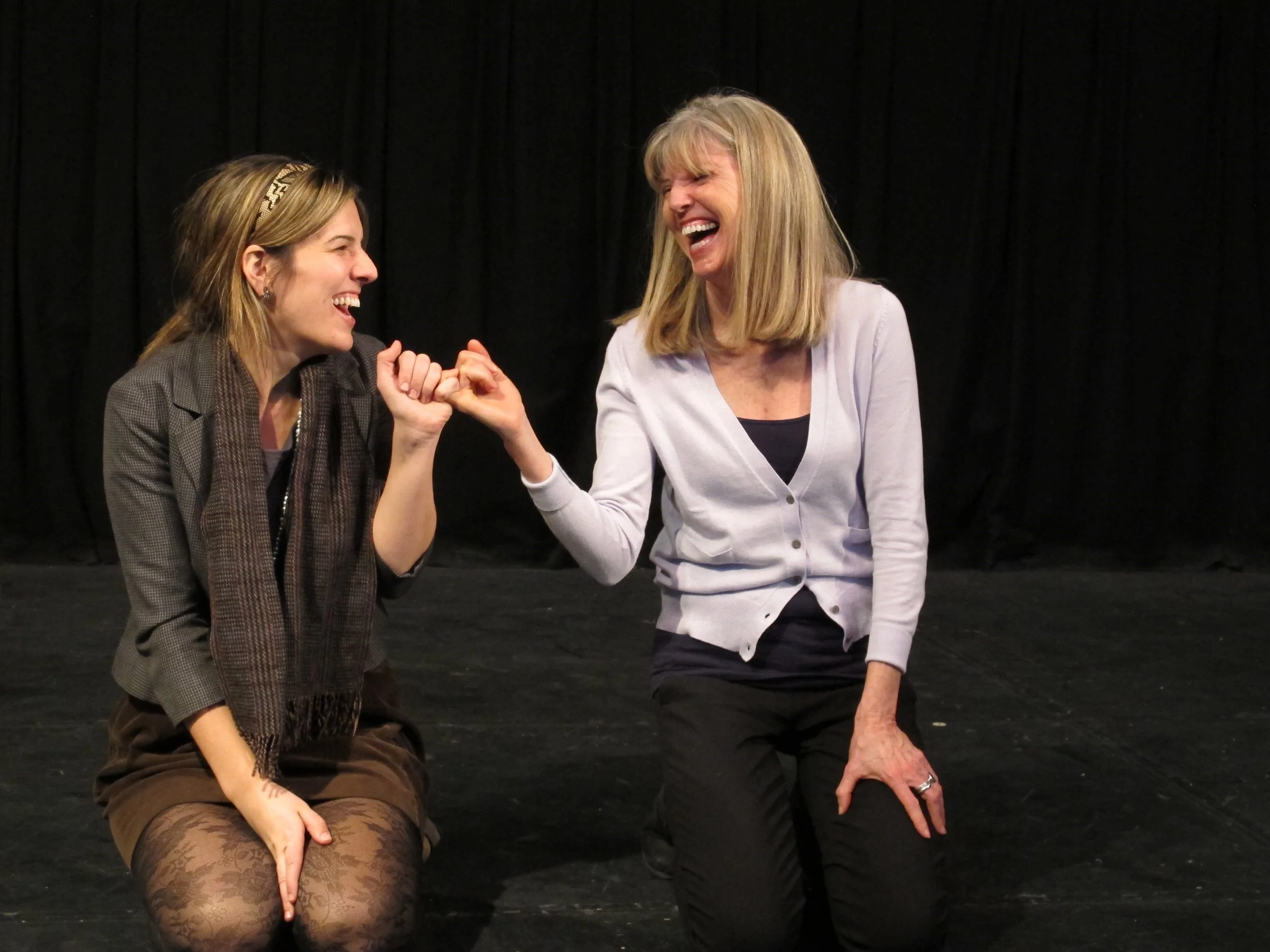
“Gary’s classes still blow my mind after 3 years. Sheer genius.”
— Tim Ward, author and student
Improv and the Writer
No prerequisites. Open to writers, actors, and anyone curious.
James Joyce is said to have called writing in English "the most ingenious torture ever devised for sins committed in previous lives." It doesn't have to be. This workshop uses improv exercises to help writers and actors bypass the internal critic and reach the place where words and ideas flow without struggle. You’ll learn to engage your material emotionally first — where the energy is — and let the rational mind catch up later. Writers gain new ways into stuck projects; actors gain new access to their imaginations. No improv experience needed.
"The workshop exposed facets of myself I had never before experienced. Powerful. I need to do it again."
— Jonathan Bartlett, improviser
Not sure where to start?
Send us a note about your improv background (or lack of it), and we’ll help you figure out where to begin.